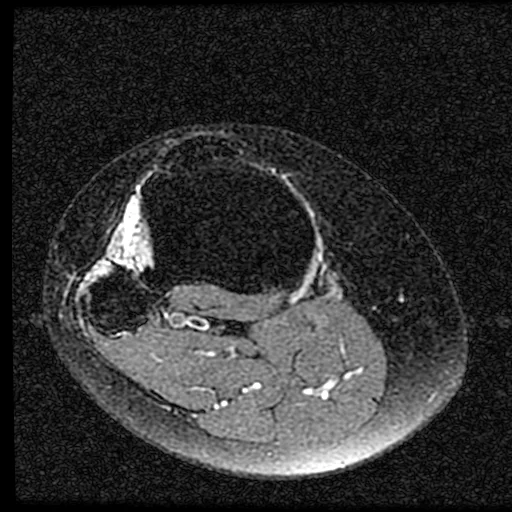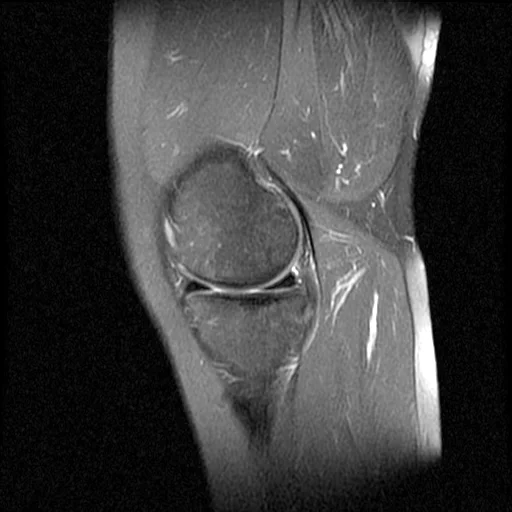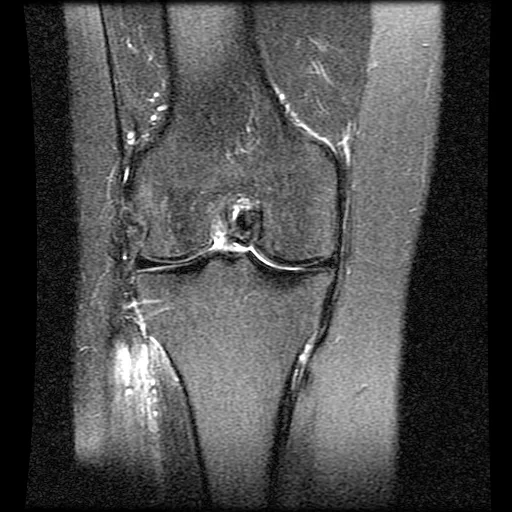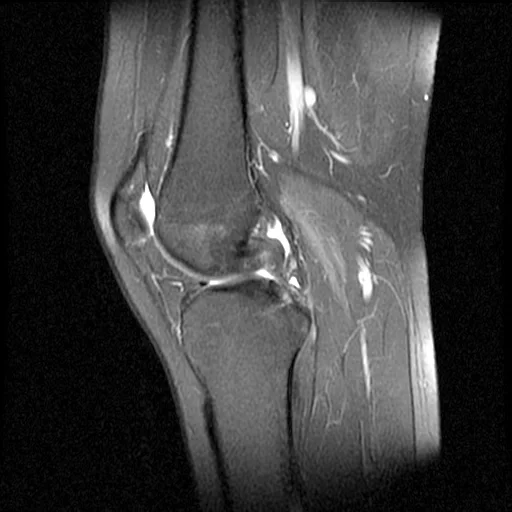
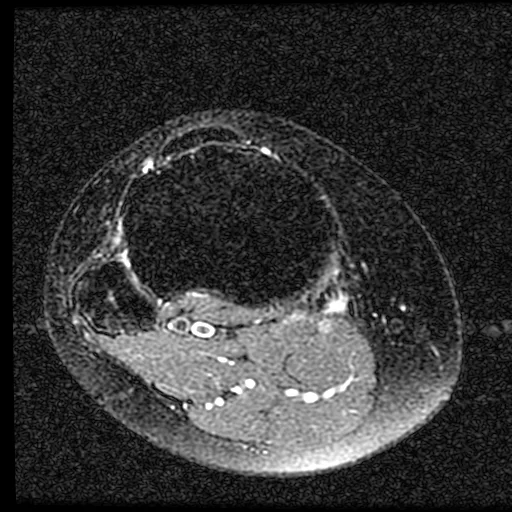
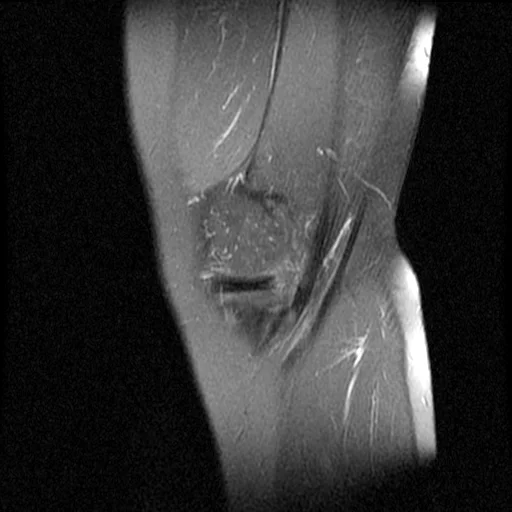
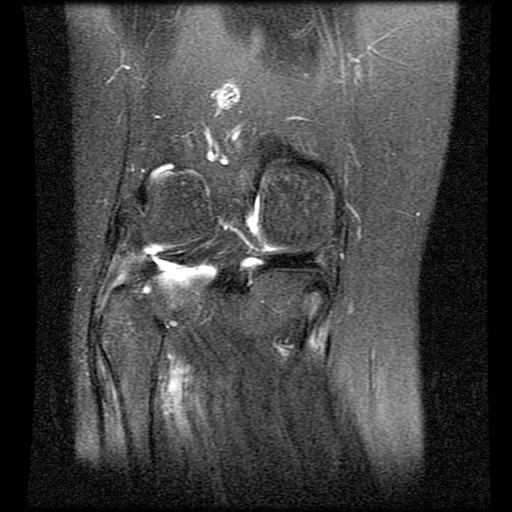
Common peroneal nerve
Marked thickening and findings suggestive of a neuroma in continuity near the distal thigh.
Personal record · 21 September 2024 to the present
An account of the injury, the four months it took to reach someone who could name it, and the practical things I worked out on the way. What I keep returning to is not blame. It is how unevenly the effort was shared.
The story
On 21 September 2024, I tripped while running in Berlin. My right knee took my full weight. The pain was immediate. So was foot drop: I could not lift my foot or toes, and the outside of my lower leg went numb.
The first scans looked for bone damage. The symptom that would define the following year was already there, but the path to a complete nerve diagnosis was not.
What happened next
Six moments changed what I understood about the injury.
Minimal redaction. Earlier institutions and individual clinicians remain unnamed. The Spanish clinic and surgeons who performed my operations are identified. Dates, reported findings, and the sequence remain.
The fall
Emergency assessment documented knee trauma, pain, swelling, altered sensation, and possible bone and posterior cruciate ligament findings.
The absent signal
Electromyography found no muscle response from stimulation of the right common peroneal nerve, while the tibial nerve response was preserved.
The diagnosis
A second electromyography localized a severe common peroneal nerve injury at the fibular head and recorded no voluntary activity in the affected muscles.
A second system
Ultrasound and magnetic resonance imaging described a possible neuroma in continuity, alongside injuries to both cruciate ligaments and nearby soft tissue.
Nerve surgery
At TraumaUnit in Barcelona, Dr. Joaquim Casañas Sintes performed the nerve graft. Recovery began on another scale, measured in millimetres of nerve growth, muscle response, sensation, and repetition.
Ligament surgery
At TraumaUnit, Dr. Eduard Alentorn-Geli performed the ligament reconstruction. It started a second, overlapping rehabilitation process with its own brace, movement, loading, and therapy constraints.
At first, I thought the body and the bureaucracy were keeping separate clocks.
The body counted in numb mornings, involuntary stabs of sensation, and the small humiliations of a foot that no longer followed. The system counted in referrals, appointments, short letters, and waiting rooms where the whole story had to begin again.
I learned to arrive carrying evidence. When a specialist finally gave the injury its name, relief and anger arrived together. A diagnosis is not a cure, but it changes the grammar of the future: What can still be saved? How much time is left? Who knows how?
03 · Inside the images
Coronal plane 14 / 28
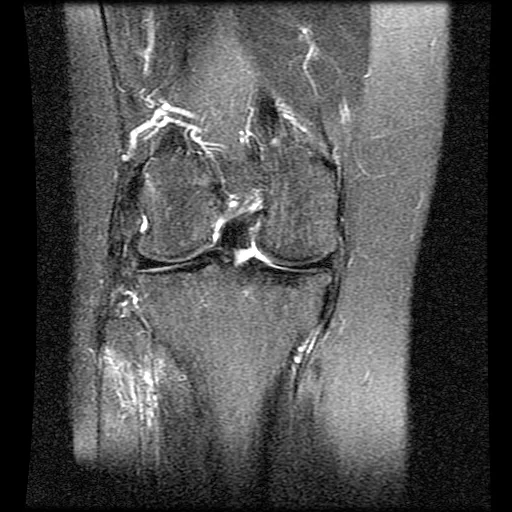
The front view
The January 2025 study was the first image set in my record to pair the knee structures with a direct look at the common peroneal nerve.
Report-guided colour
Move into a highlighted sliceThe later specialist report determines which anatomical region is coloured. Image intensity determines every dot.These are anonymized pixel exports from my own scan. The colour layer maps real image brightness inside approximate regions named by the later report. It is not a clinical segmentation, diagnostic viewer, or independent medical interpretation. Across the page, the same pixel intensities become the living dither field.
Reading the report
What the January report said
The findings below are paraphrased from the later radiology report. The coloured image regions are approximate, report-guided landmarks. What was unambiguous on the day of the fall was functional: my foot would not lift. This record cannot prove what an earlier scan would have shown.
Marked thickening and findings suggestive of a neuroma in continuity near the distal thigh.
Evidence of extensive partial anterior cruciate ligament injury and partial posterior cruciate ligament injury.
Injury around the biceps femoris insertion and a smaller partial injury at the popliteus insertion.
The system map
The guide I wish I had
I began keeping every report, scan, referral, prescription, and dated note together. The record became the only reliable way to carry the whole injury from one appointment to the next.
What I keep coming back to
Nobody caused me to trip. From that point on, though, every step that turned out to matter — the right scan, the right specialist, the right question asked in the right week — I ended up finding myself.
I had things many patients do not. Savings that could absorb two operations. A second country whose health system I could use, in a language I already spoke. Work where reading medical papers at night is not unusual. Time to make thirty phone calls. So I got there. Late, but I got there.
What I cannot stop thinking about is the version of me without any of that, who is told to wait another six months and simply waits. That is the part I find unfair. Not that a clinician made a judgement call I disagree with, because judgement calls are the work and some of them turn out wrong. It is that whether a call gets revisited seems to depend on what the patient happens to be carrying.
The law already asks for both of these at the same time. What it does not settle is who notices when only one of them is happening.
Care must be sufficient, appropriate, economical, and may not exceed what is necessary.
Read the economic-efficiency rule in the Fifth Book of the German Social CodeCare must also be needs-based, humane, medically current, and of the required quality.
Read the quality and humanity rule in the Fifth Book of the German Social CodeFirst hours
Ask for every new loss of movement, sensation, or function to appear in the examination and discharge record. Before leaving, ask what has been ruled out, what remains uncertain, and who owns the follow-up.
Build the record
German law gives patients access to their full treatment record and a first copy free of charge. Request the notes, reports, discharge letter, test results, and original radiology data. Keep a dated one-page timeline beside them.
Reach expertise
If a specialist appointment is medically urgent, ask the referring practice whether a referral with a twelve-digit urgency code is appropriate. In Berlin, that code can be used with the 116117 appointment service for most specialist appointments.
Keep therapy moving
For severe and lasting functional damage, ask whether the rules for long-term therapy need apply. Listed diagnoses can qualify directly; comparable individual cases may be submitted to the health insurer for approval.
Challenge and escalate
Start with the record and a factual memory log. Statutory health insurers must support members pursuing claims related to treatment errors and can request an expert assessment. Independent patient advisers and regional medical chambers are additional routes.
The practical toolkit
A specialist should be able to see the trajectory before the appointment clock starts.
The portable record
Tap each layer to see what belongs there.
Dates, changes in function, major findings, treatments, current limitations, and the three questions you need answered next.
Emergency notes, discharge letters, specialist letters, operation reports, and a current medication list.
Reports plus the original files. Ask radiology for the data in the Digital Imaging and Communications in Medicine (DICOM) standard, not only screenshots.
Brief dated notes on movement, sensation, pain, walking aids, therapy, and changes. Photos or videos can add context when your clinician agrees they are useful.
Referrals, prescriptions, insurer correspondence, receipts, invoices, letters sent, and proof of delivery.
A useful first move
A concise German template, based on the patient access right in section 630g of the German Civil Code.
Official starting points
Urgent medical help outside normal practice hours when the situation is not life-threatening.
↗ Your rightsAccess, information, consent, records, and routes when treatment may have gone wrong.
↗ Independent adviceFree help with medical, insurance, billing, and social-law questions.
↗ Complaints and mediationRoutes to regional medical chambers, expert commissions, and mediation bodies.
↗August 2026
I am publishing this while the story is still unfolding. If it helps one person arrive at the right appointment with the right records and a clearer question, it has done its job. The disputed expert findings, and the documents behind them, are on a separate page.
Return to the beginning